Common signs of suspension problems include excessive bouncing on flat roads, a vehicle that pulls to one side during turns, and nose-diving when applying the brakes. You may also observe uneven tire tread wear, visible fluid leaks on shocks, or a car that sits unevenly when parked. Addressing these issues early is essential for maintaining steering control and overall vehicle safety.
Navigating the rugged roads of Carbon County requires a vehicle that can handle more than just flat pavement. If your morning commute feels more like a roller coaster ride or you notice your car dipping forward when you hit the brakes, you are likely dealing with the early stages of suspension failure. Ignoring these signals does more than ruin your ride quality; it compromises your steering control and increases tire wear. At Keith Auto & Sales, we believe in keeping our local drivers informed and safe. In this guide, we will break down the most common visual and auditory cues of suspension trouble, the specific impact of Utah winters on your vehicle, and how to tell if your struts have reached their limit. Understanding these signs now can prevent a minor leak from becoming a major safety hazard on our mountain passes.
Why Your Suspension Matters on Carbon County Roads
Driving in Carbon County presents a unique set of challenges for any vehicle. From the daily commute between Helper and Price to the demanding, steep grades of Price Canyon, your car’s chassis is under constant stress. While many drivers associate a healthy suspension strictly with ride comfort, its primary role is safety. The suspension system is responsible for maintaining constant tire contact with the road, which is the only way your vehicle can effectively steer and stop.
When shocks, struts, or bushings begin to fail, the impact on handling is immediate, even if it is subtle at first. On our winding mountain roads, a compromised suspension can lead to increased braking distances and unpredictable swaying during sharp turns. Recognizing the early signs of suspension problems is essential for avoiding costly failures during a winter storm or a long trip through the San Rafael Swell.
At Keith Auto & Sales, we understand how the local terrain impacts vehicle longevity differently than a city environment. We provide practical automotive repair and maintenance services designed to keep your vehicle stable and responsive. If you notice a change in how your car handles the local terrain, you can contact Keith Auto & Sales for a straightforward assessment of your vehicle’s health.
The Most Common Signs of Suspension Problems
Identifying the early signs of suspension problems requires paying close attention to how your vehicle reacts to basic driving inputs like braking, turning, and cruising at steady speeds. Because suspension wear often happens gradually, many drivers unknowingly adapt to a degrading ride until the vehicle becomes difficult to control.
One of the most frequent symptoms is the 'nose dive.' When you apply the brakes, the weight of the vehicle naturally shifts forward. Functional struts are designed to resist this force and keep the chassis level. If the front end of your car dips significantly toward the pavement during a stop, the internal valving or hydraulic fluid in the struts is no longer providing enough dampening to counter the weight transfer. This doesn't just feel uncomfortable; it actually increases your stopping distance.
Excessive bouncing is another clear indicator of failure. Even on a relatively flat surface like Main Street, your car should settle almost immediately after encountering a dip or manhole cover. If the vehicle continues to oscillate or 'boat' up and down, the shocks have lost their ability to control the energy of the springs. Without this dampening, the tires can actually lose contact with the road surface intermittently.
Drivers should also be wary of leaning or rolling. When navigating a turn, the vehicle body should remain relatively flat. If you feel the car tip toward the outside of the curve, it suggests the suspension can no longer support the vehicle's weight against centrifugal force. Furthermore, if the car begins drifting or pulling to one side, it may indicate a collapsed spring or a worn control arm bushing that has compromised the vehicle's alignment.
At Keith Auto & Sales, we offer comprehensive automotive repair and maintenance services to diagnose these issues before they lead to steering failure. If your vehicle exhibits any of these behaviors, it is a sign that the mechanical components responsible for stabilizing your ride are reaching the end of their service life.
Visual and Auditory Cues: How to Inspect Your Vehicle at Home
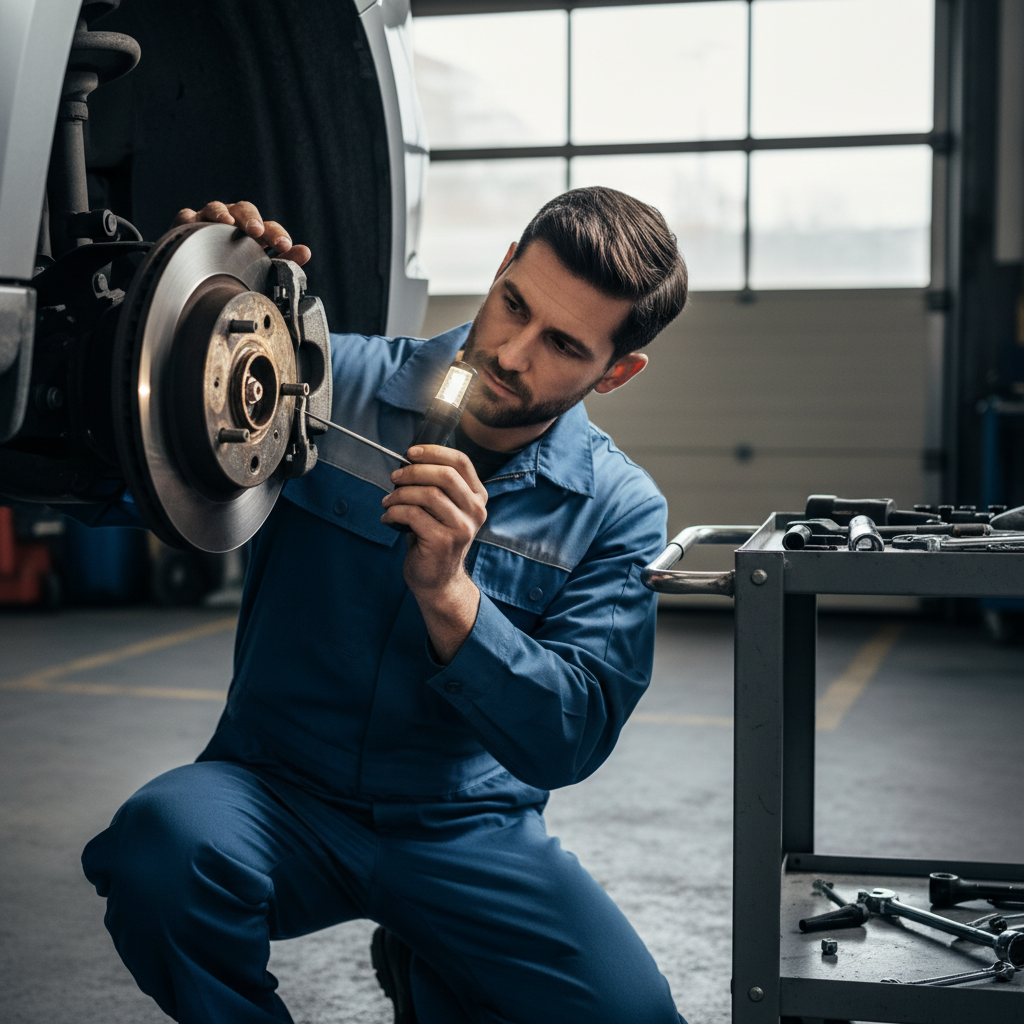
You do not need a shop lift to perform a basic visual inspection of your vehicle. Start by looking directly at the shock absorbers or struts behind your wheels. These components are filled with hydraulic fluid; if you see wetness, dark stains, or dirt caking onto the body of the shock, it indicates a leak. Once the fluid escapes, the component can no longer dampen movement effectively. Another visual indicator is uneven tire wear, specifically "cupping." This looks like scalloped, wavy dips in the rubber tread rather than even wear across the surface. Cupping usually means the tire is literally bouncing down the road because the suspension is not holding it steady against the pavement.
Listening to your vehicle is just as important as looking at it. Auditory cues often provide the first signs of suspension problems before they become visible to the untrained eye. If you hear a distinct clunking or knocking sound when driving over speed bumps or the occasional pothole, a component has likely developed excessive play. Squeaking or groaning noises during turns or over bumps are often the primary signs of bad suspension bushings. Bushings are the rubber cushions that prevent metal parts from rubbing together. When this rubber cracks, dries out, or flattens, you get metal on metal contact that sounds like a dry hinge or a heavy rattle.
For those who identify these symptoms, seeking professional automotive repair and maintenance services is the next logical step. Identifying a leak or a worn bushing early can prevent damage to more expensive components like the steering rack or your tires. You can contact Keith Auto & Sales to schedule a thorough inspection if your home check reveals any of these red flags.
Steering Wheel Feedback: Shakes, Shudders, and Wandering
The steering wheel serves as the primary line of communication between the driver and the road. When this feedback changes, it often signals deep-seated mechanical issues. A common point of confusion for drivers is the difference between a simple tire balance problem and more serious steering or suspension failure. Rhythmic shaking that occurs only at specific highway speeds usually points to an out-of-balance tire. However, if the steering wheel shudders when hitting a bump or feels loose and disconnected, you are likely dealing with signs of suspension problems.
A failing steering rack or worn tie rod ends will often cause the vehicle to wander, requiring constant small corrections to stay centered in the lane. This wandering is particularly dangerous on winding Utah mountain roads where precision is mandatory. Tie rods and ball joints act as the pivot points for your wheels; when these components wear down, they develop internal play. This gap creates a delay between you turning the wheel and the tires responding.
At Keith Auto & Sales, we specialize in identifying these steering nuances through our automotive repair and maintenance services. If your vehicle feels like it is fighting your input or floating across the lane, contact Keith Auto & Sales to ensure your steering linkage is secure before your next trip through the canyon. Addressing a shaky steering wheel early prevents the accelerated wear of your steering rack and keeps your vehicle predictable in tight corners.
The Impact of Utah Mountains and Winter on Your Suspension
Living in Carbon County means your vehicle faces environmental stressors that city cars rarely encounter. The steep grades found throughout our region, particularly when descending through Price Canyon, place significant strain on front-end components. As you brake on these inclines, the weight of the vehicle shifts forward, forcing your struts and control arms to work twice as hard to maintain stability. Over time, this repetitive stress leads to premature wear in the parts responsible for steering precision.
Winter weather adds a chemical challenge to the mechanical one. Utah road crews frequently use road salt and magnesium chloride to keep highways clear. These de-icing agents are highly corrosive; they accelerate the breakdown of rubber bushings and cause rust to form on suspension bolts and coil springs. If left unwashed, this corrosion can seize components, making simple repairs much more difficult and expensive over time.
Furthermore, the transition from rugged dirt roads in the San Rafael Swell to paved highways can reveal hidden damage. A hard impact with a pothole or a rock on a trail might seem minor at low speeds, but it can easily bend a tie rod or damage a strut internal. You may not notice the signs of suspension problems until you reach highway speeds and feel a new vibration or pull. At Keith Auto & Sales, our automotive repair and maintenance services are tailored to these local conditions. You can contact Keith Auto & Sales to ensure your vehicle is rugged enough for our unique Utah terrain.
Is It Safe to Drive With Bad Suspension or Struts?
Operating a vehicle with a shaky steering wheel or worn shocks is technically possible, but it is not safe. While the car might still move from point A to point B, its ability to react to emergencies is severely compromised. One of the most critical risks is the increase in stopping distance. When struts are worn, they cannot maintain consistent tire pressure against the road during deceleration. This can increase your stopping distance by up to 20 percent, which often represents the difference between a controlled stop and a rear-end collision.
In Carbon County, where drivers must frequently swerve to avoid deer or road debris, stability is a necessity. A vehicle exhibiting signs of suspension problems will lean excessively during sudden maneuvers, making it harder to regain control. This instability is especially dangerous at highway speeds or on winding canyon roads. Keith Auto & Sales provides professional automotive repair and maintenance services to ensure your vehicle remains predictable. If you feel a shudder in the wheel or a lack of control, you should contact Keith Auto & Sales to address the mechanical failure before it leads to an accident.
How Long Do Shocks and Struts Typically Last?
Most shocks and struts are engineered to last between 50,000 and 100,000 miles. This general range serves as a baseline, but local driving habits in Carbon County often shorten that window. If you frequently use a heavy-duty pickup for towing or spend weekends navigating washboard dirt roads, your components may require replacement closer to the 50,000-mile mark. Constant vibration and heavy vertical loads cause internal seals to fail, eventually leading to the leaks that are primary signs of suspension problems.
It is also important to distinguish between shocks and struts. A strut is a structural part of the suspension system that supports the vehicle's weight and maintains the position of the wheel. A shock absorber is non-structural; its only job is to dampen the bouncing of the springs. Because struts bear more physical load, their failure can more drastically impact your vehicle's alignment and safety. Through our automotive repair and maintenance services, we provide honest assessments of component wear. You can contact Keith Auto & Sales to evaluate if your vehicle is due for a replacement based on its specific usage.
What to Expect During a Suspension Repair at Keith Auto & Sales

Addressing the cost of replacing struts requires looking at three main variables: part quality, labor complexity, and necessary follow up services. While many drivers search for a flat price, the total investment depends on whether your vehicle requires a complete strut assembly or just the damper, alongside the specific mechanical layout of your car. Labor costs can also fluctuate based on the condition of the chassis; vehicles in Carbon County often have rusted hardware that requires additional time to safely extract.
A critical part of any professional repair is the wheel alignment. Once we replace components to fix the signs of suspension problems, the vehicle steering geometry must be reset to prevent premature tire wear. At Keith Auto & Sales, we prioritize transparency in our automotive repair and maintenance services. We walk you through the estimate, explaining which parts are essential for safety and which are recommended for longevity. If a repair exceeds the value of the car, we can also help you explore our reliable pre-owned vehicles. You can contact Keith Auto & Sales for a detailed inspection and an honest breakdown of your vehicle needs.